
What if it's not you?
For years, you've been told to work harder, become more resilient, or fix yourself.
But what if the biggest factor shaping your success isn't who you are — it's where you're trying to grow?
Growth isn't something we force. It's something we make possible.
Garden Theory is built on a simple belief: people are shaped not only by who they are, but by the conditions around them. The same person can struggle in one environment and thrive in another. Understanding those conditions changes how we lead, hire, teach, parent, and even how we see ourselves.
Before you ask what's wrong with you, ask what's missing from the environment around you.
We're all trying to grow. We just don't all grow the same way.
No two plants thrive under exactly the same conditions, and neither do people. Garden Theory groups nine archetypes into three plant families; not to rank them, but to help you recognize where people's growth needs overlap and where they differ.










Hi, I'm Dilara.
I'm fascinated by one question: what if the problem isn't you?
Bring Garden Theory to your team.
Keynotes, workshops, and team sessions on building environments where people actually thrive.
See speaking →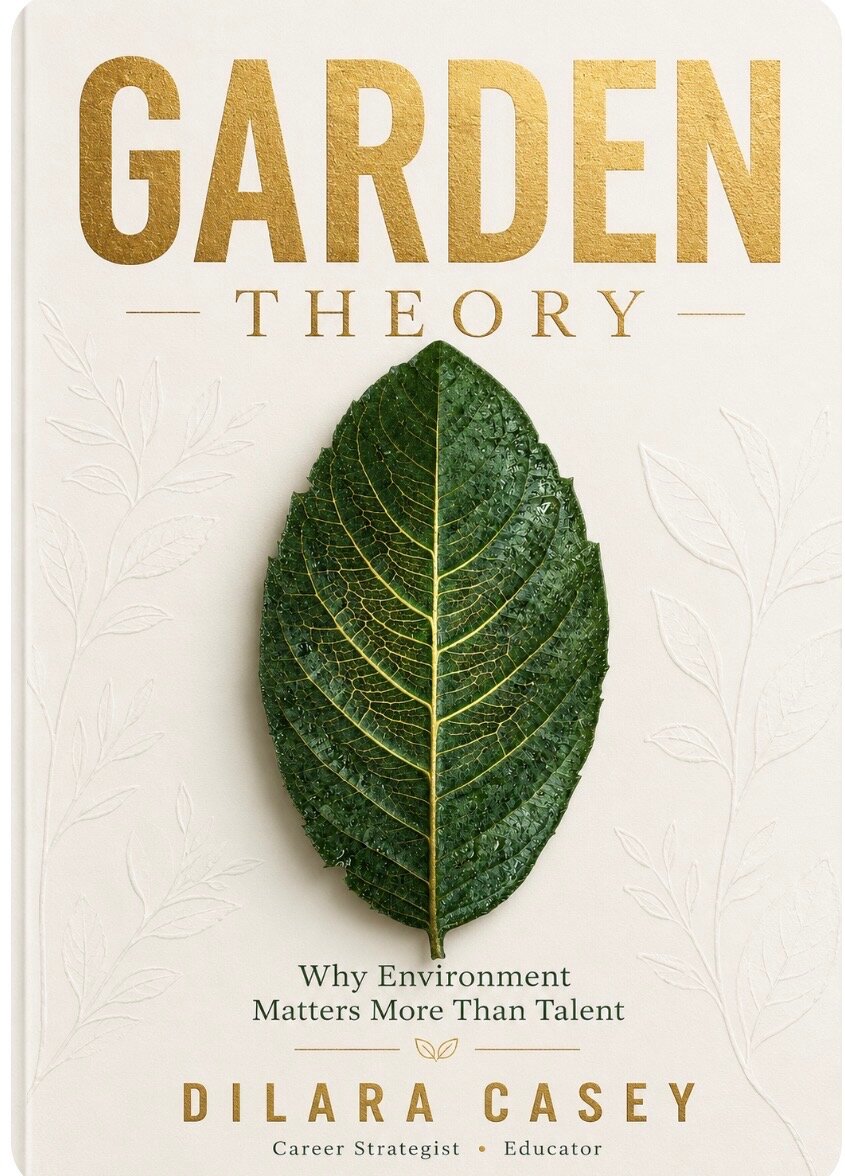
A new way to read your career.
Garden Theory is a reframe for anyone who has ever felt like a problem to be fixed. Drawing on years of coaching people through stuck seasons, Dilara Casey makes a quietly radical case: most "performance problems" are really placement problems.
The book empowers you to understand how to read your environment, advocate for the conditions you need, and start examining your environment and stop blaming yourself.

“A job is something you do. A career is something you cultivate.”
What people say after taking the quiz
“After taking the Garden Theory quiz and discovering my plant archetype, I felt seen in a way I never had before. It gave language to things I'd always felt about myself but couldn't explain. Instead of wondering what was wrong with me, I finally understood what I needed in order to grow.”— Amy D.
“I've taken personality tests and strengths assessments, but Garden Theory felt completely different. Most frameworks tell you how to change yourself. Garden Theory starts by helping you understand yourself, then asks whether your environment is helping or hindering your growth. It's practical, hopeful, and surprisingly freeing.”— Kelsey M.
Grow with us.
Get the launch announcement, deeper dives on each plant type, and field notes on building environments where people actually thrive.